Posts Tagged ‘Central America’

« Previous Entries Next Entries »

Jan 27
No Gravatar

Haley Birdyshaw, a supervisor in our contact center, took a group of employees on an exposure trip to Guatemala. The trip was a life-changing experience.

Many had never traveled outside of the United States, let alone experienced extreme poverty first-hand. As a result, their perspectives changed from “I answer questions on the phone” to “I make a difference in the life of a child.”

« Previous Entries Next Entries »

Jan 12
No Gravatar

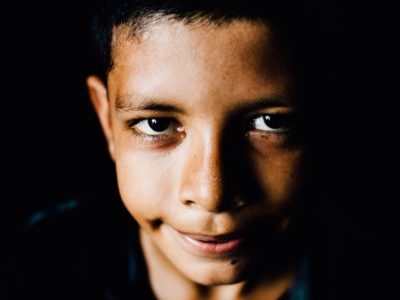
helping street children They live in abandoned buildings, cardboard boxes, parks or on the street. They frequent street corners, markets, gas stations, traffic lights and fast-food chains, meddle with the garbage, or sniff glue. Without a doubt, one of the biggest concerns for the Honduran government has been the rising number of children living in the streets – a tough environment without the care and protection of a family.

Children may end up on the streets for several reasons. They may have no choice — they are abandoned, orphaned or disowned by their parents. Or they may choose to live in the streets because of mistreatment or negligence or because their homes cannot provide them with their basic needs.

The majority of street kids live in the capital city of Tegucigalpa or in the second-largest city of the country, San Pedro Sula. Most fled from homes where abject poverty, violence, alcoholism and familial disintegration are the norm. In order to survive, they steal, dig through trash, shine shoes, or do other odd jobs.

Sadly, an estimated 90 percent of them become addicted to toxic “yellow” glue and paint thinner, which is highly addictive and extremely damaging to the human body, causing kidney failure, irreversible brain damage and, in some cases, death.

The reality is that many Honduran street kids do not make it to their 18th birthday because of the dangerous living conditions that prevail in the country. (more…)

« Previous Entries Next Entries »

Jan 4
No Gravatar

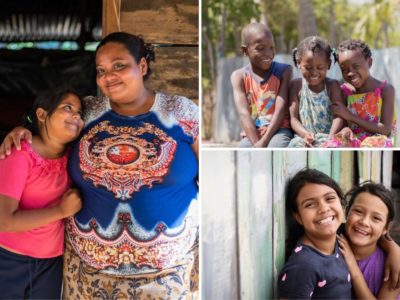
Garbage work Garbage is everywhere. Two children and their mothers used to trudge over the piles, holding a hook to dig in garbage. They were here at the dump at 5 or 6 in the morning every day.

Nearly 150 children used to work at this dump in León, Nicaragua, looking for food and other necessities, helping their families’ financial situations by collecting recyclable material like plastic, glass and metal that could be sold later.

Juan Carlos and Fatima are two children from two different families who were part of that number.

Almost every day Juan Carlos’ and Fatima’s mothers collected cans, copper and plastic bottles to sell at the end of each week. On a good week they’d get $5 to $10. The children went with them when there were no classes or activities at their child development center.

At the dump they were exposed to the hot Central American sun and an unsafe and unhealthy environment, punctuated with bad smells, flies, dirt and rotten food.

“I ask the Lord to take care of me because anything can happen at the dump. This year someone was killed in a fight for trash,” says Yolanda, Fatima’s mom. (more…)

« Previous Entries Next Entries »

Dec 29
No Gravatar

The Global Food Crisis On October 1, the Chamber of Agricultural and Agro-industrial Affairs in El Salvador published in a local newspaper that about 8 million quintals (1 quintal = 220 pounds) of maize were lost during the harvesting season last August.

Prices in general have increased, reducing the buying power of the average Salvadoran. On average, people are spending twice as much money on staples for the same amount of goods.

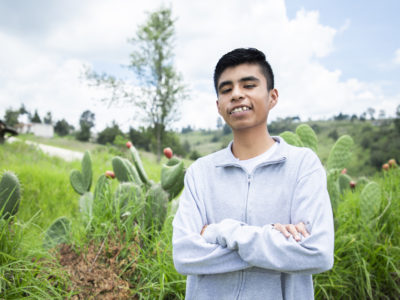
But Juan Carlos looks at his crops that extend over the mountains of the El Capulin community about 45 minutes north of San Salvador and says, “What crisis?”

He explains that he has received help with his crops from Compassion through the child development center his children attend. The help came through a Complementary Intervention (CIV) developed by Salem Bible Church with the advice from Compassion El Salvador.

Complementary Interventions are additional funds that are obtained through proposals written by the Compassion country office as a team with the implementing church partners.

Since sponsorship funds are strictly used to run the day-to-day operations at the child development centers – to meet the basic four components of child development (spiritual, physical, educational and socio-emotional areas) – additional funds obtained through CIV are necessary to implement additional benefits, such as entrepreneurship workshops, or to provide equipment for the centers (computers, water sanitation units, etc), or to offer crisis response and relief.

The CIV proposal Juan Carlos benefited from is called “Fertile Soil.” It has blessed a total of 19 families who had no resources to plant and who depend on agriculture for a living. (more…)

« Previous Entries Next Entries »

Dec 24
No Gravatar

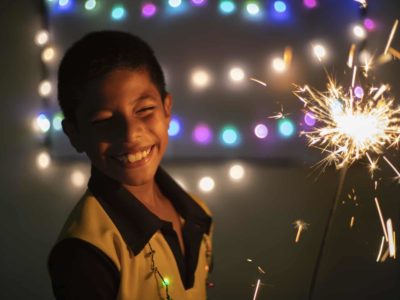
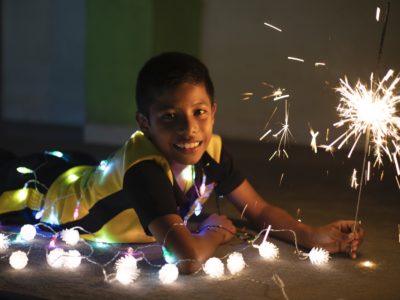
It's Christmas time December is a magical time in El Salvador. Right after the last September rains and the windy days of October and November, a cool breeze and fresh spring-like days fill the atmosphere, announcing that the dry season (usually called “summer”) is here, and suddenly everything is green, red and full of lights. It is Christmastime.
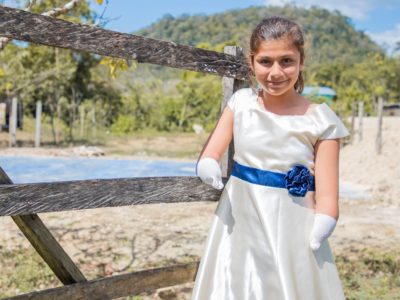
For Compassion El Salvador and for our partner churches, Christmas is more than just an evening service on the 24th. (That is right, in El Salvador, if you ask anyone about Christmas, they will answer without hesitation “December 24th.”)

For our church partners, it is an opportunity to remember the birth of Jesus, but also why He was born on Earth. It is a great opportunity to bring families together, and share the love of God with the children and their families. It is a time for blessing, spiritually and materially.

In the towns, bright, conspicuous winter sale banners contrast with the green and red decorations and the white paint that imitates snow on the showcase at the local mall. (It does not snow in El Salvador, but since the culture is so Americanized, there cannot be Christmas without snow.)

The aisles of the supermarkets and department stores are filled with pine scent and artificial trees on sale. If you ever come and visit El Salvador in December, it does not matter if you are from the United States, Canada, France or Australia, you will know … it is Christmastime.

Children in other countries and conditions might dream about the latest action hero or the most beautiful and fashionable doll. The children at our centers think a little bit differently. Not because they do not like toys, but because there are other needs to be fulfilled. (more…)

« Previous Entries Next Entries »

Dec 17
No Gravatar

Christian blog Last month I was in the Dominican Republic helping out with a vision trip. The last time I was there was in 2008 for my fifth anniversary with Compassion. I went with my wife, Gloria.

The first place we visited on that trip in 2008 was a Child Survival Program (CSP) at Jezreel Student Center. Following the presentation of the program’s facilities and a discussion of the benefits the moms and babies receive, we had the opportunity to do a home visit. It was this home visit that broke Gloria’s heart for the Child Survival Program.

Perhaps it was my ability to see this young girl’s plight through the eyes of my wife, but for the first time I was truly struck by a young mother’s vulnerability and helplessness.

The young mother’s name was Katherine, and she lived in a small plywood hovel that was just to the side of her mother’s home. Plywood and tin, and not enough of either to actually keep the elements out.

In fact, we were told that Katherine would sleep in the small twin bed with her baby and her brother, who was mute. She seemed sad and lonely, but she shared through the interpreter what Compassion meant to her and how her life was already changing because of the Child Survival Program.

Since then, I have thought many times about this young mother and her situation. In fact, it is the one story that I tell about the Child Survival Program.

The only protection for a young and vulnerable woman and her baby was an old piece of plywood that she would pull in front of the opening of her tiny shack. The holes in the walls and roof meant that it rained as hard inside her house as outside. The dirt floor would quickly become nothing but mud, which made the exposed wire from the stolen electricity to run the one light bulb that much more dangerous. She would make candles in order to afford enough food for her and her baby, but if she could not make and sell candles, they would not eat.

On this trip, we had planned to visit a CSP center for our new friends from Oklahoma and Texas, businessmen mostly, plus one gentlemen named Ray who has a ministry to executives.

As we drove to the Child Survival Program, something seemed familiar. As we pulled up on the street outside the church, I knew that I was at Jezreel Student Center again. I was instantly on spiritual alert. (more…)

« Previous Entries Next Entries »

Dec 15
No Gravatar

The Global Food Crisis Tall green mountains, healthy crops, rain right after noonday, wholesome soils. This used to be what people pictured when they thought of Guatemala.

But not anymore. The food crisis in Guatemala has become so severe that the president has declared a state of calamity, and the rate of undernutrition in children under 5 has reached 49 percent.

Many remember the famines in China in the 1950s and 60s. Or in Ethiopia in the 1980s. But famine is just not a problem of the past. It still happens in countries that have economies prosperous enough so that no child should have to suffer chronic or severe malnutrition. This is the case in Guatemala.

In Guatemala, the face of poverty and hunger is young, indigenous and rural. Guatemala, with the fourth-highest rate of chronic malnutrition in the world and the highest in Central America and the Caribbean, faces a serious challenge in reducing the rate of chronic undernutrition.

One of the causes fueling the current food crisis is the state of education in Guatemala. (more…)

« Previous Entries Next Entries »

Dec 11
No Gravatar

Leadership Development Program Listen in on Tony, Richmond, Michelle and Jimmy as they share their perspective on what works with the Leadership Development Program and how it can be improved.

You can also view the Leadership Development Program video on YouTube.

« Previous Entries Next Entries »