
A Letter to My Fans
SUBJECT: One on One with Anthony Njoroge
To all my fans,
Based on the many emails, letters and phone calls I have received I’ve decided to give you an opportunity to ask me any questions as you would like.
As part of this, I have already hired quite a number of secretaries and personal assistants to help me answer those questions. So be assured of a timely and appropriate answer.
So in a way this will be like an online press conference.
Yours sophisticated,
Anthony Njoroge
Maila’s Dream
I’m willing to bet that every person, at some point during your involvement with Compassion, ponders some variation of the following question:
“Does Compassion’s ministry really work? Compassion knows how to share stories, but how do I know it’s actually making the difference they claim?”
Guess what? We’ve wondered the same thing. So 11 years ago we set out to get proof. We started a program called “It Works.” The idea behind this program was to provide undeniable evidence that Compassion is changing lives.
It Works documents the progress of children in Compassion’s programs. We choose our “case studies.” Then we interview, photograph and film the children and their families. Five to seven years later we return to see what God has done. Being 11 years into the program, we are now on our second round of return trips.
During last week’s chapel time we got to see this video and it was too exciting to keep to ourselves.
Meet Maila.
You can also view this video about Maila on YouTube.
Finding Christ in Burkina Faso
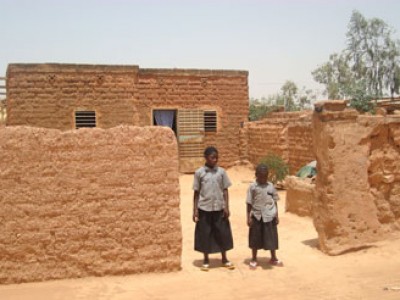
It was noon when I reached the family’s house. There was too much sun. Rasmata and Aguirata were sitting with their mother, Fati, in the small living room because there was no shade outside. Only a small tree that was planted by Aguirata could be seen in the courtyard.
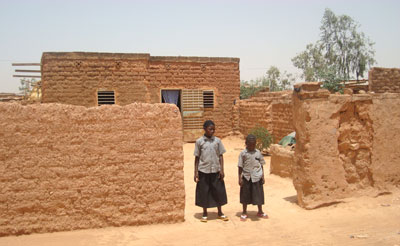
The family lives in an area that lacks services — no water, no electricity and no telephone. The courtyard has no doors; thieves stole them. The family even keeps their firewood in the living room so thieves cannot carry it away.
Because of the lack of services, life is very hard. People are obliged to walk kilometers to queue for hours to buy water. During the dry season, a barrel of water costs between $1 and $2. It often happens that people even fight to get some water.
The mother used to wash clothes to earn money but could not earn enough to feed the family. Then her husband passed away. It was such a shock to Fati that she almost went crazy. Because of her psychological problems, she could not work.
Fati was desperate to care for her children. It was a big relief when the Compassion child development center registered her daughter Rasmata, but it wasn’t enough — the need was still there. Rasmata’s little sister also needed help. A member of the center’s management committee who was aware of this family’s condition pleaded to the leadership team and was able to get Aguirata registered too.
Yet, all the effort was about to fail. The late husband’s brothers came from the village to take Rasmata and Aguirata. The reason: the mother was unstable psychologically and could not take good care of her daughters. But taking them to the village would mean putting an end to the opportunity they had to go to school and have free access to health care.
But God was in control. The child development center team leader met the men and told them about all the benefits the girls would have if they continued attending the center. After several days of negotiations, the men came to understand the wonderful opportunity the children had and decided to let them stay.
For Fati, there has been a great change since her two daughters joined Compassion.
“I am grateful and do not even know how to thank the Compassion project for the huge relief. In the past, it was hard to have even a meal a day. Today, thanks to the project, we are able to eat two to three times a day. Besides, my daughters’ school fees are paid for by the project. I could not believe that someone could help me raise my children freely, without asking anything.”
The center activities have brought so many changes in the lives of Rasmata and Aguirata. According to their mother, they used to be very intractable, but since their registration, they have been kind and obedient, and she believes that all this has been possible thanks to the biblical input.
In fact, when the girls started going to the center, they were Muslim, along with their mom. Whenever they came back from the program activities, they would start singing Christian songs, and would pray before eating or going to bed. Their mother was wondering what was happing to her daughters, but was very happy with the great change in their behavior.
“At that time I could not believe that I myself would be Christian,” Fati said, smiling.
What convinced her to give her life to Jesus was Compassion taking care of her daughters with no ulterior motives. “The woman came to the project office one day with tears and told me that she wanted to give her life to Jesus in whose name the project was bringing up her daughters,” the project team leader said.
Without Compassion this family would have fallen apart, but now Fati and her two little daughters have come to Christ.
Aguirata told us that she would like to become pastor to preach the gospel. As for Rasmata, she would like to become a nurse to treat the sick.
Focusing on the Leadership Development Program
I’ll start by saying this: It’s very hard to explain impact a Compassion trip can have on a person.
For most of my life, the only thing I knew about poverty was the Sally Struthers commercials. You know, those spots from the ’80s with all the slow-motion shots of children crying. I have been given the opportunity to go with a video production crew to various countries to film the work of Compassion. In some way, I expected to see this Sally Struthers image. I was totally wrong.
I’m a sound engineer for Student Life. We produce large camps, conferences and a variety of additional resources for churches. About the time I started working there, Student Life had just partnered with Compassion. Since then we’ve always had a Compassion presentation at our events, and work to educate our attendees about what sponsoring a child means.
Last year we were sent to Uganda to interview students from Compassion’s Leadership Development Program* (LDP). Our hope was that some of the students would travel with our camp teams throughout the summer and lead the Compassion presentation from stage. What better way to show the work of Compassion than to put living proof of that work on stage?
Before this trip I had already been on one Compassion video shoot, but it was a 48-hour whirlwind trip to Guatemala. It was a fast turnaround, and we were only able to see a few children. Our video focused on one child’s experience meeting her sponsor. I could see the impact Compassion was having on a single child, but what would the finished product look like? All I knew going into the Uganda trip was that LDP students had grown up through the Compassion child sponsorship program, graduated, and were then sponsored through college. These students were the cream of the crop.
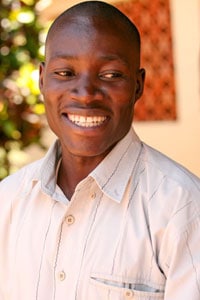 We arrived in Kampala and tried to get some rest. The next morning we had our first LDP student interview. His name was James.
This was initially a typical setup for our team. We had done hundreds of interviews. What I did not know was that my life and perspective of Compassion would be changed forever by the testimony of this man.
James was more educated, well spoken and passionate about his relationship with God than I could say I have ever been. He described his childhood –- one that was riddled with loss of parents and siblings, leaving him alone to live with an aunt. He spoke of being malnourished and without hope. Then he said all that changed when he joined Compassion.
I could have probably predicted most of his interview to this point. We had asked most of the questions, and it was the picture of so many nonprofit companies and others who serve those less fortunate than most Americans. He was a child in poverty who was given a chance. It was his answer to our last question that stopped us all cold. (more…)

Give an Ice Cream Sandwich to a Child in Poverty
What would you do … to give a few moments of pleasure to a person drowning in poverty?

Cultural Compassion
“Given the extensive comments in the Bible regarding the importance of taking care of the poor, we expected to see a larger distinction between the responses of born-again Christians and non-Christians.” – David Kinnaman, president of the Barna Group
2008 Compassion Sunday Update
Be forewarned. What follows is pure rah-rah. It showed up in employee inboxes … from MARKETING. It’s just a small glimpse into the response Compassion Sunday 2008 has received so far.
We’re at over 9,700 children sponsored. Our goal is 22,000. It’s not too late to host your own event.
“Austin Bluffs Evangelical Free Church had a successful Compassion Sunday response. We had seven sponsorship commitments! That is a huge number for our church, which traditionally has two to three sponsorships on Compassion Sunday …. We had at least one current sponsor/family that wanted to sponsor another child. Others took brochures and information as they consider the opportunity to sponsor a child.”
– Pepe Alicea, Compassion Advocate and Lay Elder at Austin Bluffs Evangelical Free Church
“Richard Douglas of Christ Community Church in South Carolina called and requested 50 more child packets. He had 50, and people were running up to the table to sponsor the kids. He said the packets were gone in three minutes, and he had a list of people waiting for more! Once the extra packets arrived, another 29 children were sponsored”
– Valeen Tschamler,Advocates Network & Marketing Assistant
“Hilltop Assembly of God has 147 members, and I guessed the audience size was about 180-190 including children. They began the worship with the children bringing flags of all the 17 countries where their congregation has sponsored children (they sponsor 60 of them) and setting them in front of the church on displays they had made. Then the children sang their own worship chorus in Spanish
One girl, Emery (11 years old) was brought forward to tell how God had laid it on her heart to make jewelry and sell it at a consignment shop to give to Compassion, and then I was presented with a $20,000 check by the 11 new Advocates in their church to fund a Child Survival Program (CSP) in Ethiopia.
At the end of the service the children came in with balloons that had the names of all the sponsored children on them and the whole congregation went outside and had a “releasing children from poverty” ceremony! (Yes, they were biodegradable balloons).
After the service all of the chairs were moved from the sanctuary and we enjoyed an international buffet!
Oh yeah … another 24 children were sponsored, and they now have 12 advocates! The little church now sponsors over 80 children and a CSP paid in full!
They’re already planning fund-raising events for next year and have over $13,000 raised so far. Did I mention that they began all of this last December 2007? With God all things are possible!”
– Mark Pellingra, Relationships Manager Northeast Region
“Get this — I just got off the phone with brand-new advocate Beth Hathcock in the Dallas area. I guess during her interview she mentioned wanting to do Compassion Sunday at her church (small — about 70 people) and Mark Pellingra said that she would get a box of materials. He intended for her to fill out the materials order form, but she got her initial training kit with the one child packet and thought that is what we sent for a church of 70. So she used her one child packet, showed a couple video clips off the DVD she had gotten, got her one child sponsored and used a sign up sheet for the 10 other people who wanted to sponsor. Not bad for someone brand new, self-proclaimed as “not a public speaker” and no materials.”
– Doug West, Southeast Regional Advocates Manager
“Thanks for sending 10 more packets. I had one lady who kept looking at them for a long time, then scooped up five to sponsor. I was flabbergasted….”
– Mike Jennings, sponsor
Are You Okay With Dung?
In his book The New Friars, Scott A. Bessenecker tells a story of living in and serving a garbage community in Cairo with his family and some college students. After a month, “what at first was repulsive — rotting garbage piled everywhere, animals feeding off the trash, mothers climbing rubbish mountains with their babies playing next to them in the refuse” became normal. Inwardly, he questioned if that was okay. He wondered if they were “bringing Western standards of housing and cleanliness to people who have developed their own culturally defined norms for quality of life and are just fine with how things are.”
The Lord answered him in a dream.
I dreamed about the dung truck. You could always smell the dung truck before seeing it. It was the kind of smell that is more like a taste at the back of your throat; pasty and bitter…. Temperatures of over 100 degrees released the dung’s pungent odor with a vengeance, making this task even more intense than can be appreciated by someone reading this in comfort.
In my dream I was walking past the dung truck. To my horror, I saw my children, Hannah, Philip and Laura, sitting on top of the mountain of dung heaped on the bed of the truck. What struck me most about them was that they appeared perfectly content although every inch of their bodies was covered by animal waste. Then I felt the Lord speaking to me. He seemed to be saying, “As their father, are you satisfied? Even if they are satisfied, are you satisfied?”
I’m still sifting the impact of that dream, but the immediate implication is that a person’s contentment with a situation of poverty does not make it okay. My passion for my kids is a shadowy reflection of God’s heart, which yearns for his children to have more than the dung that surrounds them; not riches, but a life in which their needs are met in a way that doesn’t mask their need for him.
How Far Is The Hill?
I’m in Guatemala right now, taking a handful of sponsors and radio broadcasters on a trip to see how Compassion is changing the lives of children in poverty. And I just had to share something that hit me today. I’ll try to keep this short because the internet service here is so iffy that I doubt I’ll be able to write much.
As we were driving to one of the child development centers, we saw a lot of poverty. Families living in shacks made of scraps of wood, tin … and mud bricks. We saw women working in the corn fields and men sweating in the afternoon heat as they heaved loads of cinder blocks for their construction jobs. But off in the distance, we saw some nice big houses … perched along the hillsides. Those hills overlook the areas where the impoverished families live. (I’d upload a photo but it’s apparently too much for the internet service, and my computer freezes up.)
My first thought, as we were driving by, was “How can those people live in those huge, nice houses and look out from their shaded balconies at such poverty? How can they sleep at night in those big homes, knowing that five, six … maybe as many as eight people are crammed into a tin shack, sleeping on a dirt floor, with growling tummies just a hundred yards away?”
Then I realized … the only difference between me and those people is how far away the hill is. My hilltop home is a thousand miles away instead of a hundred yards. So I must be willing to ask the same questions of myself. “How can *I* live in my big home knowing that poverty is stealing so much from innocent families?” How dare I judge. How dare I question … unless I’m willing to question myself.
Truth is, I don’t know the hearts of those people who live in those big homes (which were only “big” by comparison to the shacks in the foreground. In actuality, they were about the same size as my house.) I don’t know them. They may be the providers of jobs for those families. They may be the ones keeping their local economy from completely tanking.
But I do know my heart. And I know I’ve got some growing to do. I know that God blessed me with a nice home, a wonderful family and a great job … not so I could sit on my shaded balcony, turning a blind eye to the needs of the world, but so I could be part of the solution.
It’s not wrong to be blessed. But I believe it *is* wrong to be blessed and not be thankful for it. It *is* wrong to be blessed and not share that blessing.
How far is your hill from poverty?
Ask Wess
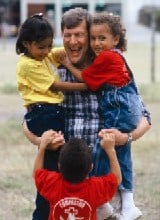 Our president, Wess, is a smart man. (He’s also very humble so unless you ask him, you might not be aware of just how many interesting things he knows.)
Raised in Africa, a one-time resident of Haiti, he’s got a fascinating life journey. Thanks to all his travels and experiences overseas, he knows about many things including (but not limited to) slingshots, Indiana Jones, children, malaria, green mambas, hunting, Africa, raising daughters, fire ants, poverty and God.
You may have seen our series of posts entitled “10 Questions With” The intent was to help you better understand our holistic child development model. Well … we want to post another one in the series, but this time with a twist. (It’s like reality TV — we gotta keep changing it up or you get bored.) So here’s the twist: this time YOU provide the questions.
That’s right.
We’re giving you free and clear access to ask our very own president and CEO Wess Stafford anything you like.
- Ask him about his childhood.
- Ask him his middle name.
- Ask him how he met his wife.
- Ask him about work.
- Ask him why ostriches can’t fly.
Now’s your chance to ask Wess some of those burning questions you always wanted answered. You can submit as many questions as you want. He’ll pick 10 of them to answer.
Ready … set … go!
Share Your Umbrella
A few weeks ago my little girl Brooklyn asked me for some cookies and milk for herself and her 2-year-old brother. They sat down in front of the TV in their pajamas (we call them jammies at our house) and watched their favorite DVD while I served them cookies and milk.
That’s when it hit me. We are so blessed!
There my kids are eating chocolate chip cookies and cold milk with nothing on their mind but “I hope Dad forgets that we’re supposed to do nap time today.” While somewhere in a land far, far away from their minds (and mine most of the time) is a little girl Brooklyn’s same age working long hours of forced labor who has never had a day of cookies and milk in her whole life. Somewhere there is a child my daughter’s age (4) that will work harder today than I will and will go to sleep hungry tonight.
On our refrigerator at home there is a picture of our sponsored child. Her name is Heidi, and she lives in Bolivia. (Brooklyn thinks the little girl’s name is Bolivia.) We pray for Heidi often. We pray for her to have plenty to eat. Sponsoring Heidi is a great way for my wife and I to teach our children about others’ needs and how we can help by sharing.
Last Wednesday at Compassion’s chapel service I had the chance to hear a young man that truly grasps the power of sharing. Zach Hunter is a 16-year-old abolitionist who is giving his life to the cause of releasing slaves and giving them their God-given right to freedom. He has been speaking out against slavery since he was 11 years old.
I wonder how many students (or adults for that matter) have even thought about slavery today. Thanks to Zach Hunter at least 600 people thought about slavery that day in chapel and 500,000 more will think about it this year as he speaks to them.
As I studied Zach’s message I realized it is storming all around us, and for whatever reason God has given most of us in this country an umbrella. He didn’t give us an umbrella so that we would deny that it is storming. He gave us the umbrella to acknowledge the storm and share our umbrella with those who don’t have one.
Zach asked the question, “How do people in severe poverty know that God is good?” The only way they could know that is if God’s people share His goodness with those who have not experienced it.
It’s raining hard, Church. Share your umbrella.
Children in Poverty Win When You Search Kindly
Here’s something very easy you can do to help children in poverty.
- Use Search Kindly as your search engine during May. (It’s powered by Google.)
Thanks to your votes, Compassion will receive 100 percent of Search Kindly’s ad revenue for the month of May. Their goal is $1,000, but we’re hoping for more than that. How’s that for transparency? And how about $2,500 as a goal?
There’s a thermometer on their homepage where they show how much money has been generated so far. Right now, we’re at $84.
Here’s how it works:
More eyeballs = more money = more children helped.
More advertising revenue is generated from unique visits than from frequent visits. What that means is the “Money Thermometer” goes up more quickly for each new pair of eyes that view the site than it does for repeat visits, but the keywords there are “more quickly”. Repeat visits definitely help!
For those of you who get a bit overwhelmed at the technical side of all this web stuff, like some of us on the Web Team 🙂 here’s your To Do list.
- Use Search Kindly as your search engine.
That’s it.

