Author Archive

« Previous Entries

Jul 10

I used to work on the web team, which meant that writing for the blog was part of my actual job description. But God made it clear to me that He had other plans, and now a month later, here I am working on the International Communications team. Basically, my new job is to be the communication link between our field countries (where the kids live) and the partner countries (where the sponsors live) when a crisis occurs.

A crisis is anything from a natural disaster like a hurricane or an earthquake, to a man-made one like civil unrest or war. It might be a bus accident, or a building collapsing, or a shooting, or a volcanic eruption … any event that affects a group of children in our programs. Because of the volatile nature of the developing countries where we work, crises occur frequently.

Unless you are Super-sponsor and check out the crisis update page daily, you probably are unaware of the wide variety of dangers our children face. I know I was. Even as an employee, it’s hard for me to keep up with all the events occurring around the world. It just seems like an unending list of prayer requests.

And it’s been easy for me to be more or less ignorant.

Except now the crisis reports are coming to my inbox. I’m the first one to find out if dengue fever is killing the kids in our program. I get the news if one of our projects has been looted and destroyed. I’m the person who first hears of children dying in a flood or a mudslide. When a crisis occurs, it’s my job to get accurate information to you as quickly as possible.

It’s a huge responsibility. Even as I write this, I’m overwhelmed by the responsibility God has placed on me and the trust that you place in me (and all of us who work for Compassion.) I take this responsibility seriously.

For the sake of the children we serve, I hope my job is extremely unexciting … boring even. The way the world has been lately, though, I have a feeling things will just get worse.

While this new position is emotionally heavy, I have hope because I am confident that none of this is outside of God’s control. He is not surprised by the crises. Only saddened, at times, by our response. We as Compassion employees, and you as sponsors, have been specifically appointed to be miracle-workers for children in poverty all over the world.

What a calling, huh?

Popularity: 41% [?]

« Previous Entries

Jun 18

In an effort to keep you from becoming emotionally disconnected

This video, featured on Washingtonpost.com, is the most effective video I have seen yet on the global food crisis, in terms of showing the awful reality of poverty.

As I learn more about this crisis, I am increasingly convinced that THIS - the global food crisis - is our opportunity to live out Proverbs 3:27-28.

Do not withhold good from those who deserve it, when it is in your power to act. Do not say to your neighbor, “Come back later; I’ll give it tomorrow” — when you now have it with you. (NIV)

Although Compassion does not currently work in Mauritania, we do work in 24 other countries where you can make a difference.

What will you do?

Popularity: 41% [?]

« Previous Entries

Jun 12

Have you ever repeated a word over and over in your head so many times that it eventually loses its meaning and starts to sound like nonsense? It happened to me the other day with the word “lemon.”

I said lemon so many times that it started to sound like a word I made up. Or like a word from a foreign language. After a while, the word “lemon” was meaningless — it no longer represented a tangy, yellow fruit. It was just a funny sounding nonsense word running through my head.

I think Satan likes to use a similar technique to get us to stop caring about the hurting people of the world.

Whenever we make an emotional connection to someone in need, we are motivated to act. So by getting us to feel disconnected from a certain group of hurting people, he gets us to stop acting on behalf of those who need help. One of the ways he does this is through what’s been called “compassion burnout” or “compassion fatigue.”

When a major crisis happens, the news media often reports it so quickly and intensely that for a time, it’s pretty much impossible to get away from it.

Remember watching TV the week after September 11, 2001? No matter where I looked, I couldn’t escape the horrific images. Those first few days, I couldn’t watch the news without crying. But after a while, I had heard the same stories reported so many times that they no longer affected me the way they did at first. I got used to the horror. I got numb.

Were any of you in this same boat with me? Maybe for you it was the coverage from Hurricane Katrina. Or the Asian tsumani. Or the earthquake in China. Or the Global Food Crisis. The list seems endless, doesn’t it?

This article, recently posted on urbana.org, addesses the idea of compassion burnout.

What do you do when you’ve heard something so many times that you get fatigued … you’re tired of helping, tired of giving, tired of caring?

How do you keep from getting overwhelmed with the desperate needs of the poor or numb to their pleas for help? How do you not get discouraged by the never-ending necessity for compassion?

The article includes several good suggestions for preventing burnout.

But what I’d love to know is how you deal with this on a personal level. Are there things we can do in bringing the needs of the poor to your attention that will help create the emotional connection and keep our stories from getting stale?

Popularity: 35% [?]

« Previous Entries

May 17

I’m willing to bet that every person, at some point during your involvement with Compassion, ponders some variation of the following question:

“Does Compassion’s ministry really work? Compassion knows how to share stories, but how do I know it’s actually making the difference they claim?”

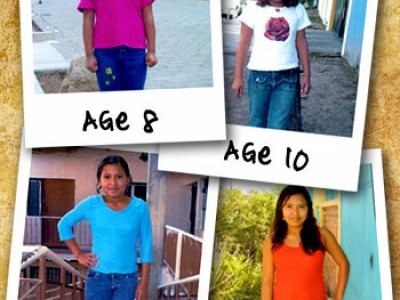
Guess what? We’ve wondered the same thing. So 11 years ago we set out to get proof. We started a program called “It Works.” The idea behind this program was to provide undeniable evidence that Compassion is changing lives.

It Works documents the progress of children in Compassion’s programs. We choose our “case studies.” Then we interview, photograph and film the children and their families. Five to seven years later we return to see what God has done. Being 11 years into the program, we are now on our second round of return trips.

During last week’s chapel time we got to see this video and it was too exciting to keep to ourselves.

Meet Maila.


Popularity: 40% [?]

« Previous Entries

May 13

Working at Compassion is hard on your heart.

When I purposely expose myself to the ugly things in life, I open myself up to possibility that my heart will be hurt. It’s a scary, vulnerable place, but it’s exactly where God has called me to be.

My heart hurt badly last week when I read this in a crisis report from our staff in Bangladesh …

Approximately 95 percent of Compassion-assisted children are feeling the effects of the [global food] crisis. Many are living on one meal a day — receiving it at their child development centers — and struggling with feelings of guilt and sadness because their family members don’t receive the same benefit.

Did you get that? Our children are feeling guilty for eating one meal a day.

We just had our once-a-quarter meeting where all the different department leaders report their numbers for the previous quarter. Usually, this meeting is filled with exciting reports of how God has blessed Compassion beyond our expectations. We set high goals and God consistently exceeds them. And while last week’s meeting had its share of positive reports, the one issue that overshadowed everything else we talked about was what is being called the Silent Tsunami, or the Global Food Crisis.

Have you heard of it? If you haven’t, you’re likely not alone. But perhaps you’ve seen a glimpse of it here at home: “the rising cost of gas” or “economic recession” or “the creation of biofuels.” But whereas we here in the United States are facing inconvenience and sacrifice, our brothers and sisters around the world are facing death by starvation.

Does this upset you? It should. It obviously upsets me. We’ve got to start doing something about it now because this crisis is going to get worse before it gets better.

This Global Food Crisis is complex — it is not caused by one single thing but is the combination of many factors including:

When several of these factors occur together, it creates a kind of “perfect storm” situation, with global consequences. Compassion Vice President of International Program, Mark Yeadon, says that while every person is affected at some level by this crisis, there are varying degrees depending on where in the world you live. Some are refraining from purchasing that new car or vacation home. Some are carpooling to work or riding their bike more. Some are adjusting their grocery list to accommodate the higher food prices. Some are wondering where there next meal will come from. Some don’t worry about where their food will come from because they don’t need to wonder — they know there’s no food.

I don’t mean to depress you. I want to motivate you. Compassion is in a position to make a difference. We have already sent supplementary funds to our two hardest hit countries, Haiti and Bangladesh. We are in communication with our staff in other countries at risk and will address the issues based on the level of severity.

If you are interested in giving money to our Global Food Crisis fund, you can do that. But this is NOT an appeal for money … this is an appeal for your broken heart.

Our family is hurting, and I hope you are not okay with that.

Here are some small things you can do:

  • Pray for God to show you what you should do.
  • Learn about the crisis and then tell others what is going on.
  • Write to your sponsored children in Bangladesh and Haiti to encourage them and love on them.
  • Pray hard about which candidate to support in the upcoming presidential elections.
  • Talk to your own children about what is happening around the world.

While it’s hard not to get overwhelmed at the situation, God is so much bigger than this, and none of this is out of His control. So what is it that He’s asking you to do?

Popularity: 56% [?]

« Previous Entries

May 2

About six years ago Compassion’s headquarters moved to our current building. It’s waaay up north on the very edge of the Colorado Springs city limits. Back then there wasn’t much around. (Not so anymore, though. Colorado Springs is included on the list of fastest growing cities in the U.S.!) But back when we first moved, we were in the boonies.

So with our remote location and not many lunch options, one of the exciting features of our new building was the New Delhi Café. Our own little onsite restaurant. It’s not quite up to Google level, but it offers a menu of hot breakfast and lunch dishes available daily for the 550+ staff who work in this building. It’s great!

But here’s where we got Google beat. Our executives do the cooking!

Okay … not all the time. But once a month a “celebrity” chef cooks us lunch — it’s the “Guest Chef” program.

I bet Larry Page and Sergey Brin have yet to don the apron and tall white hat and serve up lunch to their employees.

Little tip: If you’re hoping to land a position here at Compassion, you might want to brush up on your culinary skills.


Popularity: 41% [?]

« Previous Entries

Apr 28

You might have read about it in the news.

Companies are now offering poverty tours. Basically, wealthy people can pay money — sometimes a lot of money — to go see what life is like for those living in poverty. One article I read recently calls it “poorism” — a catchy phrase for this idea of visiting a developing country and viewing those living in poverty as a tourist attraction. Poverty tourists go as a group, following a tour guide as though they are seeing a museum exhibit or an attraction at an amusement park. One of the companies, the other article mentions, after a day of viewing poverty even treats the wealthy guests to a gourmet dinner as a culmination of the evening.

Sickening, right?

Yeah, that’s what I thought too. But I very quickly was struck with my seeming hypocrisy.

In thinking about the articles, and what it is about this trend that bothers me so much, I couldn’t help but think about Compassion’s “vision trips” and sponsor tours, both core components of our marketing strategy. How are these any different than what these articles talk about?

Are we, through our exposure trips, simply promoting another form of poverty tourism? We take groups of wealthy people overseas to see the poverty firsthand. Many times on these trips we walk as a group of foreigners through a slum, observing how the poor live. We look at the dilapidated shacks and dusty, rutted roads. We take photos and video of those living in poverty. Yes, we spend time at projects or homes, loving on whatever children might be around. We stop and pray with single moms and overworked fathers. But we are still taking a group of people through the slums for the purpose of exposure. And then at the end of the day, or the end of the trip, we return to our lives of wealth.

So tell me…is what we are doing on our trips different than what I was so quick to condemn in these articles? Is there a difference?

I think there is. That difference is in the answers to two questions:

What is our motivation for going in the first place?
and
What is our response when we get back?

How we answer these two questions makes all the difference between our trips and those mentioned in the articles above. Are our hearts broken into small enough pieces that we come back changed? Do we go back to our lives as they were before, or will we make a profound change because of what we saw? Will we be become a voice for those we saw who are suffering in silence?

If we don’t - if, after exposing ourselves to the poverty and suffering of others, our lives remain the same - that is when it beomes poverty tourism.

Popularity: 68% [?]

« Previous Entries

Apr 18

I ran across this quote on another blog. It’s definitely deeper than your average beach reading, but it’s worth your time. What do you think?

… Jesus in his solidarity with the marginal ones is moved to compassion. Compassion constitutes a radical form of criticism, for it announces that the hurt is to be taken seriously, that the hurt is not to be accepted as normal and natural but is an abnormal and unacceptable condition for humaness. In the arrangement of “lawfulness” in Jesus’ time, as in the ancient empire of Pharaoh, the one unpermitted quality of relation was compassion. Empires are never built or maintained on the basis of compassion. The norms of law (social control) are never accommodated to persons, but persons are accommodated to the norms. Otherwise the norms will collapse and with them the whole power arrangement. Thus the compassion of Jesus is to be understood not simply as a personal emotional reaction but as a public criticism in which he dares to act upon the concern against the entire numbness of his social context.

(From The Prophetic Imagination by Walter Brueggemann)

Popularity: 24% [?]

« Previous Entries

Apr 8

I’m a fan of American Idol. I’m an especially big fan this week.

Wednesday marks the second year that the Fox reality show takes a break from their regular programming to do something virtually unheard of on television these days — focus on something other than making money.

Idol Gives Back is an effort to raise awareness and funds for children in need around the world. Last year the event raised $76 million. This year they’re shooting for $100 million.

Whether or not Fox brings in the millions this week that they normally make on the show, the event probably does enough for their public image to make the monetary sacrifice well worth it.

Whatever their motivation, though, it’s refreshing to see the spotlight shining on those who truly need it but rarely get it — children in poverty.

Among the recipients are organizations like the Global Fund, Malaria No More, Children’s Health Fund, Children’s Defense Fund and Make It Right, Brad Pitt’s campaign to help New Orleans recover from Hurricane Katrina.

There will be celebrities. There will be music. There will be tears. Millions of viewers will undoubtedly be moved to donate. Some will likely be profoundly impacted by the stories they hear and the images they see. Hopefully many hearts will be softened towards the plight of children in poverty and people will do more than just give once … they will begin to get involved.

I’m just excited that for a couple hours this week, children in poverty will have a real voice. That’s really what Compassion is all about.

What do you think? Do you agree? Will you be watching?

While Compassion might not be featured on the show, we are working just as hard to fight for children in poverty. Here are a couple specific things you might like to know about:

Malaria: A Plague of the Poor
In recognition of World Malaria Day on April 25, Compassion has produced a new radio special.

AIDS
Compassion’s AIDS Initiative is focused on Africa. Yet HIV and AIDS are also significant threats to children outside of Africa and for that reason Compassion is also conducting HIV/AIDS work in non-African countries.

Popularity: 32% [?]

« Previous Entries

Apr 2

I sponsor a boy in Haiti named Youvens. In the seven years I’ve sponsored him, I’ve never, ever seen him smile.

Even when I visited Haiti and brought him a soccer ball. No smile. He played soccer with me, ate lunch with me and never let go of the ball. But he never smiled.

Becky and Youvens

It’s understandable. He lives in one of the most poverty-stricken places on earth. I’ve seen the devastation in that country, and I can’t imagine what he’s been through in his short life.

As I’m sure you can see, Youvens is a very sad, serious child.

Youvens 2001Youvens 2003
Youvens 2005Youvens 2006

This past January my friend Mark was going to Haiti and so I asked him to take a birthday present to Youvens.

A couple weeks later I got this photo.

Youvens 2008

That smile is all the proof I need that my sponsorship makes a difference.

Popularity: 63% [?]

« Previous Entries