
You might have read about it in the news.
Companies are now offering poverty tours. Basically, wealthy people can pay money — sometimes a lot of money — to go see what life is like for those living in poverty.
One article I read recently calls it “poorism” — a catchy phrase for this idea of visiting a developing country and viewing those living in poverty as a tourist attraction.
Poverty tourists go as a group, following a tour guide as though they are seeing a museum exhibit or an attraction at an amusement park. One of the companies, the other article mentions, after a day of viewing poverty even treats the wealthy guests to a gourmet dinner as a culmination of the evening.
Sickening, right?
Yeah, that’s what I thought too. But I very quickly was struck with my seeming hypocrisy.
In thinking about the articles, and what it is about this trend that bothers me so much, I couldn’t help but think about our “vision trips” and sponsor tours, both core components of our marketing strategy. How are our trips any different than what these articles talk about?
Are we, through our exposure trips, simply promoting another form of poverty tourism?
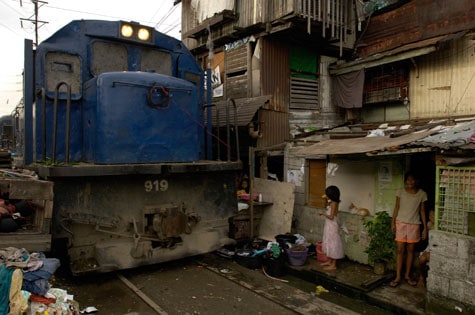
We take groups of wealthy people overseas to see poverty firsthand. Many times on these trips we walk as a group of foreigners through a slum, observing how the poor live.
We look at the dilapidated shacks and dusty, rutted roads. We take photos and video of those living in poverty.
Yes, we spend time at projects or homes, loving on whatever children might be around. We stop and pray with single moms and overworked fathers. But we are still taking a group of people through the slums for the purpose of exposure.
And then at the end of the day, or the end of the trip, we return to our lives of wealth.
So tell me…is what we are doing on our trips different than what I was so quick to condemn in these articles? Is there a difference?
I think there is. That difference is in the answers to two questions:
What is our motivation for going in the first place?
and
What is our response when we get back?
How we answer these two questions makes all the difference between our trips and those mentioned in the articles above.
Are our hearts broken into small enough pieces that we come back changed? Do we go back to our lives as they were before, or will we make a profound change because of what we saw? Will we be become a voice for those we saw who are suffering in silence?
If we don’t – if, after exposing ourselves to the poverty and suffering of others, our lives remain the same – that is when it beomes poverty tourism.






23 Comments |Add a comment
Having been on many Compassion trips, as well as church trips and personal travel to see the dear ones in developing countries, I think the difference is the heart. People come back from these trips with their hearts changed and a desire to help the poor. Nothing brings the reality of poverty to light than meeting it in the form of a beloved person.
I work with poor children in Paraguay. One thing I’ve wanted to do for a better understanding is to spend a week with a street vendor, stay where he stays and do what he does.
They have enough European blood floating around here that if I dress the part and keep my mouth shut I should not be in too much danger. Finding the time is the hard part.
If not for the danger aspect in general, I think it would be far more fruitful to actually experience their lives for a time and not just see it as a spectator.
I think going just to see the poverty versus going for some other reason, like to see your sponsor child, and taking note of the poverty while you are there makes a huge difference. Compassion sponsors are already doing more than many who just want to see it will ever do.
There is a tourist train in Paraguay that I took. For some the draw is the old wood fired locomotive and restored cars, for others it is the artisan city where it ends up, but it is not a poverty tour.
And yet it passes through some very poor places on its way to its destination. There are poor homes of every level, track side shanties, children swimming in mud puddles, etc.
We even had to slow down in an area where electrical lines were spliced across the tracks to some shacks on the far side. The owners either came out to undo the connections, or let the train undo them by default, and then reconnect them afterwards.
Children swarmed out to see the train pass and make it whistle. My favorite part was sitting at the window waving to all the spectators, who were primarily poor children.
I enjoyed the trip and it was good to see how others live their lives. It was unintrusive, they did not feel that they were on display and it seemed more authentic.
If seeing that poverty had been the goal of that trip I think it would not have been as enjoyable, beneficial, or impactful. It also would not have been as well recieved by the locals. As is, they had as much fun seeing the old train chug by as did the riders.
Yes there is great value in seeing how the majority of the world’s population lives firsthand. I just think you need to go with a purpose other than seeing how the majority of the world’s population lives firsthand, which makes it less authentic somehow.
I’d love to visit my sponsor child someday, but I gave up a good paying career to actually go and minister to the poor children of Paraguay.
An unusual thing here, the poor homes and rich homes are intermingled, each with a compound wall, but side by side. I go past shacks every day, by car or by foot, doing my job.
I’m not just visiting, I live and work here, and that gives you a totally different perspective you will never get by a one time tour. I’ve never been much of a tourist anyhow, if I go somewhere I want to be put to work.
What an interesting concept! It’s in a way disgusting that people would make a profit out of other people’s misfortune! But on the other hand, a lot of people who have never thought too much about poverty can be severely impacted by a tour like this. There needs to be some exposure to poverty or we might always be ignorant and never do anything about it. You’re spot on when you say it all depends on the motivation behind it. We should be exposed to it so that we understand we need to do something to help make change!
Honestly, I don’t see how anyone could see people living in such conditons and not be moved to help in some way. If people are truly going just to gawk and go back unchanged that is the true poverty…
I struggle with these issues too, especially as a high school chaplain. I worked in the poorer parts of Africa for eight years in the eighties and nineties. Now in my high school we run a one week Poverty exposure trip to Mexico. It’s not enough to understand poverty – even eight years isn’t enough – you have to BE poor to understand, but it’s something. The trips are truly about listening. Visitors should leave not feeling as if they know something, but as if their work is just beginning.
I think overall the trips are useful because you don’t know who they’re going to change or how. And in my experience the people visited appreciate the concern. But lets not judge other people’s trips. That’s a little unfair.
Becky,
You asked: Is it possible to truly understand life in poverty without ever going to see it for yourself?
To be honest, I do not know. I believe ‘going and seeing’ certainly helps in understanding poverty.
However, understanding is only a means, not the main goal for us. I do not think Jesus in the gospels calls us to understand poverty. I would say the Bible presupposes all of us have a sufficient basic understanding of poverty to make us responsible for doing something serious about it.
When I share with the people around me about Compassion child sponsorship, I concentrate on the biblical call to help the needy.
Still, there is this disturbing call for equality among believers from 2 Corinthians 8:13-14. I would love to hear some people share something on their understanding and application of this text.
I feel like the call for equality is quite seldom used in our efforts to motivate ourselves to help those in need. Do we fear it is just demanding to much?
My estimate is I’m about 20 times wealthier than most of my sisters and brothers in the faith all over the world. How should I implement this equality?
Is anybody out there struggling with the same type of questions?
I believe there’s still another difference–or two–but this, too, requires an assumption: that the folks taking “poverty tours” have no personal involvement before they go. On sponsor tours, everyone has a personal relationship with a child, or works for Compassion and likely sponsors at least one child, somewhere.
Another possible difference is in what we do when we’re there. On a sponsor tour, we get “down and dirty” with the children. We interact with them, hug them, kiss them, play games with them, worship with them.
But, yes, there are moments when it feels as if we’re gawking. Those first moments when we enter a church, find a seat, and then look around can be awkward. The best way I’ve found is to find a seat–or squeeze in–among some children and start interacting right away.
There’s another difference. Friends of mine visited their compassion child last year and talked to her about Jesus. She wasn’t ready to get saved at that moment but did change her mind and become a Christian about a month later. She is hanging out with Christian nationals growing spiritually. I doubt poorist tourists ever see that happen!
The scary part about this conversation is that Jesus didn’t come to observe the world, or even help the world, but he came to be the lowliest in the world. I’m afraid we’re called to do the same. Nouwen called this Jesus’ “downward mobility.” My hope is that these trips and experiences in time create solidarity. Not just pity or shock, but friendship.
I don’t know how to respond; I have written (and erased) 4 or 5 times so far. I suppose the bottom line (for me) is that I’d be lying if I told you I wasn’t guilty.
Guilty of what?
Yea…all of that.
I can’t help but wonder how it makes the poor feel. When they see a ‘gawker’, do they feel embarrassed, ashamed, wish we’d go away? Or do they think, “Have a great time and return with some friends, because for every person that comes to see us, our economy is stimulated a little bit more.” I would hope that a trip like this would affect everybody, whether emotionally invested with Compassion or otherwise.
Kind of different, but you made me think of this.
I came to Paraguay initially to teach in a school for American missionaries and rich Paraguayans, but knew after one semester it was not for me. I also knew I needed to come back and work with the poor.
I needed pictures to show my church what I saw so I could find the money I needed to return without the school paycheck. I went to a park and took pictures of the shantytown that butted up to it.
The guy in the first shack starts yelling at me, and not knowing his language I assumed he was mad I took a picture of his poor home. I looked at his body language and he was actually trying to tell me to put my camera away and get out of their for my own safety, presumably before robbers targeted me.
Of course I tried not to look like a tourist or someone with money by dressing like the locals and keeping my camera out of sight in baggy pockets between shots. I was going alone where foreigners should not go and without the language no less. My friends, US and PY, questioned my sanity for that venture.
I hope that we are not assuming that the poverty tours you first talked about do not affect the wealthy people that go. Whether they are eating a good meal that night or not, they have paid money to be concerned with the rest of the world. Attitude is everything. Those people that are paying the money to go, are also likely to be able to do something very substantial financially, that some of who care a lot already, before we have seen it.
Within the materialism of most of the western world I suspect it would be easy to return from a “sponsor” trip and get slowly sucked back into not doing anything about it. A new haunting Caedmon’s Call song speaks of this in searing fasion – http://caedmonscall.net/song-vault/overdressed/two-weeks-in-africa/
Author N.T. Wright has also said that our search for justice is often coupled with globe trotting curiosity. I think it would be awesome to take a trip someday to Ecuador and visit the child we sponsor – I also like the idea of visiting Ecuador or other south and central American country’s to visit their coffee plantations. I’m sure I would meet impoverished individuals in each instance.
I’m not sure I see the difference between a sponsor trip and these “poorism” trips. In both cases one confronts a seeming injustice and each person on each of these trips will have to decide how they wish to respond both foreign and domestic.
While I haven’t been on a sponsor tour yet, I hope to be able to visit each of my three children someday. The difference for me would be the relationship I have built with my children and their families. I think I have an idea of some of the conditions that my children live in and others I don’t even want to imagine. What will make it so hard for me so see, and what will also make a difference for me in my reaction in all of it, is once again, that relationship. I’m not going to see some far off, abstract, place that I can forget about when I get home. Because of that relationship, I will have no choice in my response.
Beth
I think it’s motive. My husband and I have both spoken about how we would love to someday be able to visit our compassion child. We love this little boy and in a small way he’s become a member of our family. Poverty is a part of his life, which we’d certainly be exposed to and witness first hand. But our desire for the trip would be look into the eyes of our sweet little boy and let him know he’s loved.
I love those verses in 2 Corinthians, Andrzej. And I think that’s the perspective we should come away from these trips with.
So here’s a question … do you think it’s possible to truly understand life in poverty without ever going to see it for yourself?
Sometimes I think about the situation when Jesus was looking at the people that were giving money in the Jewish Temple. Are we not like those who were giving out of their surplus? (Mk 12:44) Is this bad or is this good?
And another text comes to my mind, from 2 Cor 8:13-14: “For this is not that others may be eased and you distressed, but for equality. Your abundance at this present time supplies their lack, that their abundance also may become a supply for your lack; that there may be equality.”
How far should we go to make this equality happen? In fact, what does the equality mean here?
I’ve been struck by how we can feel like these actions are hypocritical when “in the field,” but when we come home, they seem just fine.
If I have a gourmet meal in Kenya when there are people living in squalor in a slum just minutes away, that seems just awful. Or if I look at the 2,000 square foot homes next to a slum, it seems so decadent.
But if I come home to Colorado and go to Chili’s and eat an Awesome Blossom–well that’s just normal. Or if you live in a 2,000 square foot home–normal again (that’s all they seem to build anymore).
Somehow the distance and the juxtaposition of American wealth makes the exact same actions seem hypocritical in one country and par for the course in the other.
I have a life motto that I stole from a bumper sticker: Attitude is everything.
And I think your explanation perfectly exemplifies that, Becky.
Why are you going? What are you going to do about it? Those motivators have a HUGE impact on a trip into poverty.
I briefly boarded the poverty train when I went on my first sponsor tour, and this was despite having the “right” motivation for going on the trip.
After a day of digging fence holes in hard packed dirt with a crowbar at a child development center in Nairobi’s Kibera slum, I got an hour long massage at the hotel that evening.
The contrast between the two worlds I experienced that day was surreal.
I can speak from personal experience, having taken a sponsor tour with Compassion. The difference is that the purpose of the tour is not to just see poverty and then go back to our normal lives. It is a teaching experience. We see the children and the situations they live in. But, we also see the hope they have when they are a part of a Compassion project (which is part of a local church). We see the smiles and wonder at how they could be so happy while living in such dire circumstances. And, it causes us to question ourselves with questions such as, “How will I respond to this?” It forces us to re-think how we live or lives and how we will spend our money. I’ve never been the same after returning from my first sponsor tour. I was changed. And, that’s the difference from a tourism tour and a Compassion sponsor tour.