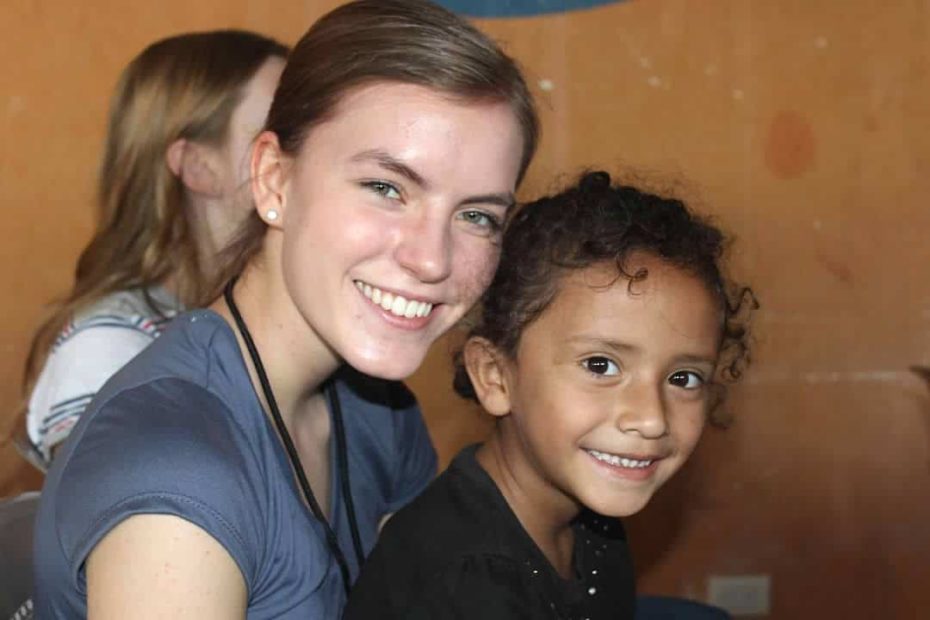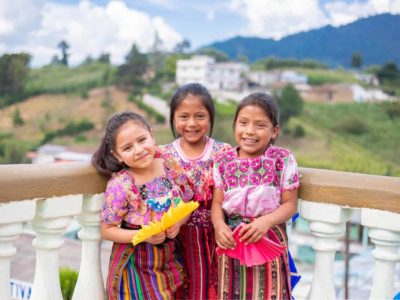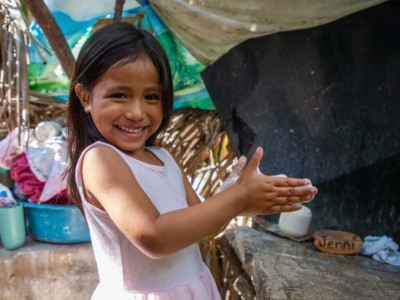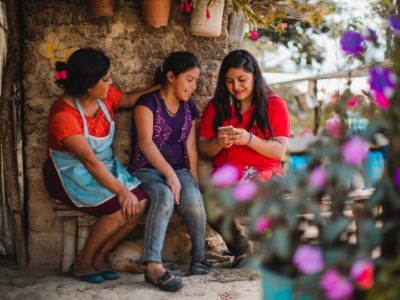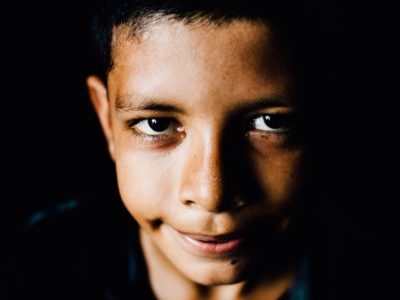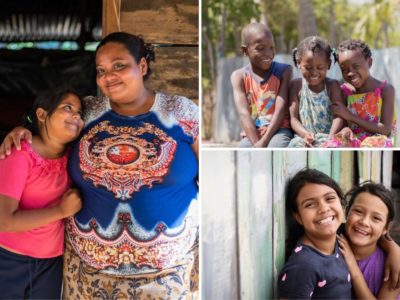
I just got this cute, cute picture of Pamela at her child development center, viewing herself on the blog from Wednesday’s post! Samuel says she was embarrassed at first but couldn’t help smiling once she saw it.

Popularity: 32% [?]
I just got this cute, cute picture of Pamela at her child development center, viewing herself on the blog from Wednesday’s post! Samuel says she was embarrassed at first but couldn’t help smiling once she saw it.

Popularity: 32% [?]
Have you ever wondered how your sponsored child’s letter gets to you? The long journey it takes from Tanzania or Thailand to Connecticut or California? There’s a lot more to it than you might think!
Samuel Llanes, Guatemala’s Field Communication Specialist, gives us a peek at the journey of one letter from Guatemala to a sponsor in Australia. (Did you know that Compassion International has sponsors all over the world from Australia to France to South Korea?)
Pamela, a little girl sponsored by a married couple in Australia, says, “I love writing letters to them! When I write my letter, I wish I was right there with my sponsors.”
She has received two letters in the two years she has been sponsored, and she keeps them safely at home. She knows who they are and what they do, and she prays for them before bedtime each night.
When Pamela receives a letter, it has gone through a long journey. First the letter is sent from Australia to the Compassion International field office in Guatemala. Each country Compassion works in has its own field office. The letter must then be translated into Spanish for Pamela to understand.
“Translating is such a blessing to me,” says Julia Zepeda, a pastor’s wife and translator who has been working for Compassion International Guatemala for eight years. “I have taken this as a ministry that helps children, and I know is worth it.”
The translators are given one week to complete all the translations once they’re given a group of letters. The average number of letters that must be translated a week in Guatemala is usually around 180 to 200! After translating, the letters are brought to the student centers where they are distributed to the children. Receiving a letter is a special moment for children — they know that someone out there cares about them and is praying about them.
Letter Day
“Letter day” happens every four months. Pamela, along with all the other children at her Guatemala City student center, writes a letter every four months, though her sponsors may not write her that often.
When Pamela writes her letters, she uses a notebook to write a first draft. She does not want to miss anything that her sponsors asked her in their letter. Pamela’s tutor reads her sponsors’ letter to her, and as it is read, Pamela answers all the questions they asked. If they have sent something special, like stickers, she makes sure to thank them. Then once she has decided what her letter will say, she writes out her final draft.

Letter Day is an exciting day. The student center celebrates all the children for their efforts in writing letters on Letter Day. They give prizes to celebrate every child — and sometimes they even have a clown and piñatas!
Once Pamela’s letter is written, she gets to take her letter from her sponsors home, which she gets very excited for.
On Its Way
Once Pamela’s letter and all the other letters are written, they are brought to the Guatemala field office and translated into English. The packages of translated letters are then labeled and sent to be processed at Compassion International’s Global Ministry Center in Colorado Springs, Colorado. The children’s letters are sent from Guatemala to Colorado once a week.
Each week, child letters arrive in large boxes in Colorado Springs from all over the world to be tracked and sent on their way.
First, the letters are sorted by where the sponsors are from. All the letters going to U.S. sponsors are grouped together, all the letters going to the United Kingdom are grouped together, and so on.

Each letter is then scanned into a database, using the barcode at the top of each child’s letter, so Compassion can track all of the letters that are sent.
Once all the letters have been recorded in the database, they are bound together according to the letter’s destination country, and shipped out every Tuesday.
So the letters that our sponsored children write to us have been through a long process, passing from one hand to another until they arrive in your mailbox in that envelope saying, “A Message From Your Sponsored Child.”
Popularity: 52% [?]
See the photo? The one at the top of the page. It was done by one of you.
Eric Chapman (aka chappyphoto) took it. He’s a friend we met by way of our Flickr group.
We liked his photos so much we asked if we could use one in our blog’s header. Then we asked if he wanted to write a post for us. We do that sometimes.
But enough of that. It’s time to focus your attention on what Eric says when he’s not behind a camera.
For most of my life, the only thing I knew about poverty was the Sally Struthers commercials. You know, those spots from the ’80s with all the slow-motion shots of children crying. I have been given the opportunity to go with a video production crew to various countries to film the work of Compassion. In some way, I expected to see this Sally Struthers image. I was totally wrong.
I’m a sound engineer for Student Life. We produce large camps, conferences and a variety of additional resources for churches. About the time I started working there, Student Life had just partnered with Compassion. Since then we’ve always had a Compassion presentation at our events, and work to educate our attendees about what sponsoring a child means.
Last year we were sent to Uganda to interview students from Compassion’s Leadership Development Program (LDP). Our hope was that some of the students would travel with our camp teams throughout the summer and lead the Compassion presentation from stage. What better way to show the work of Compassion than to put living proof of that work on stage?
Before this trip I had already been on one Compassion video shoot, but it was a 48-hour whirlwind trip to Guatemala. It was a fast turnaround, and we were only able to see a few children. Our video focused on one child’s experience meeting her sponsor. I could see the impact Compassion was having on a single child, but what would the finished product look like? All I knew going into the Uganda trip was that LDP students had grown up through the Compassion Child Sponsorshop Program, graduated, and were then sponsored through college. These students were the cream of the crop.
We arrived in Kampala and tried to get some rest. The next morning we had our first LDP student interview. His name was James.
This was initially a typical setup for our team. We had done hundreds of interviews. What I did not know was that my life and perspective of Compassion would be changed forever by the testimony of this man.
James was more educated, well spoken and passionate about his relationship with God than I could say I have ever been. He described his childhood –- one that was riddled with loss of parents and siblings, leaving him alone to live with an aunt. He spoke of being malnourished and without hope. Then he said all that changed when he joined the Compassion Child Sponsorship Program.
I could have probably predicted most of his interview to this point. We had asked most of the questions, and it was the picture of so many nonprofit companies and others who serve those less fortunate than most Americans. He was a child in poverty who was given a chance. It was his answer to our last question that stopped us all cold. (more…)
Popularity: 57% [?]
I’m in Guatemala right now, taking a handful of sponsors and radio broadcasters on a trip to see how Compassion is changing the lives of children in poverty. And I just had to share something that hit me today. I’ll try to keep this short because the internet service here is so iffy that I doubt I’ll be able to write much.
As we were driving to one of the child development centers, we saw a lot of poverty. Families living in shacks made of scraps of wood, tin … and mud bricks. We saw women working in the corn fields and men sweating in the afternoon heat as they heaved loads of cinder blocks for their construction jobs. But off in the distance, we saw some nice big houses … perched along the hillsides. Those hills overlook the areas where the impoverished families live. (I’d upload a photo but it’s apparently too much for the internet service, and my computer freezes up.)
My first thought, as we were driving by, was “How can those people live in those huge, nice houses and look out from their shaded balconies at such poverty? How can they sleep at night in those big homes, knowing that five, six … maybe as many as eight people are crammed into a tin shack, sleeping on a dirt floor, with growling tummies just a hundred yards away?”
Then I realized … the only difference between me and those people is how far away the hill is. My hilltop home is a thousand miles away instead of a hundred yards. So I must be willing to ask the same questions of myself. “How can *I* live in my big home knowing that poverty is stealing so much from innocent families?” How dare I judge. How dare I question … unless I’m willing to question myself.
Truth is, I don’t know the hearts of those people who live in those big homes (which were only “big” by comparison to the shacks in the foreground. In actuality, they were about the same size as my house.) I don’t know them. They may be the providers of jobs for those families. They may be the ones keeping their local economy from completely tanking.
But I do know my heart. And I know I’ve got some growing to do. I know that God blessed me with a nice home, a wonderful family and a great job … not so I could sit on my shaded balcony, turning a blind eye to the needs of the world, but so I could be part of the solution.
It’s not wrong to be blessed. But I believe it *is* wrong to be blessed and not be thankful for it. It *is* wrong to be blessed and not share that blessing.
How far is your hill from poverty?
Popularity: 29% [?]
I’ve been working at Compassion for eight months, and I dig it. I dig it like Dig ‘Em digs Honey Smacks. There’s good people here, plenty of parking, a fantastic view of Pikes Peak, stellar lunch specials at the New Dehli Café and of course, a job that makes a difference.
Howwwever, I work on a computer. And I tend to work on that computer all day long, with nary a break. I don’t often make it to the café to enjoy my self-serve special for $4.99, and it really is special because I have a hand that serves and serves and serves.
I also frequently forget to take a breath and enjoy the view or even say cheerio to my co-workers. I glue my rear to my seat and my eyes to my monitor and there I stay for the day. Ugh!
And when I’m in this all-work mode, I often lose sight of why I’m working. I only see trees, no forest.
But all throughout the Global Ministry Center hangs artwork created by children in our sponsorship program. It’s amazing artwork, not only because of the talent it illustrates but because it exists.
What if Compassion wasn’t in this child’s life? Would this talent have had an opportunity to develop? Would it be given the chance to enrich other people lives, like it does mine when I scrape my eyes from my computer screen?
Here’s what I’m talking about.
Popularity: 43% [?]