Nov 20

Written by: Edwin Estioko

No Gravatar

Christian servant leadership Every year, graduating Leadership Development Program (LDP) students in the Philippines go to work camp where they engage in community service. The yearly work camp usually engages students in missionary work to unreached tribal groups, but this year the students extended a helping hand to typhoon victims.

At the end of October, LDP students from all over the Philippines came together in Manila, Santa Mesa, Novaliches and Bulacan for the annual camp. They were tasked to perform community service for those who had been badly affected by Typhoon Ketsana, which dumped more than a month’s worth of rain in just 12 hours, fueling the worst flooding to hit the Philippines in more than 40 years. Read the rest of this entry »

Nov 19

Written by: Web Team

No Gravatar

Life after graduation Tony, Michelle, Richmond and Jimmy talk about what they will be doing after they graduate from Moody Bible Institute and share some ways that you can pray for them.

You can also view the Life After Graduation video on Vimeo.

Nov 18

Written by: Becky Tschamler

No Gravatar

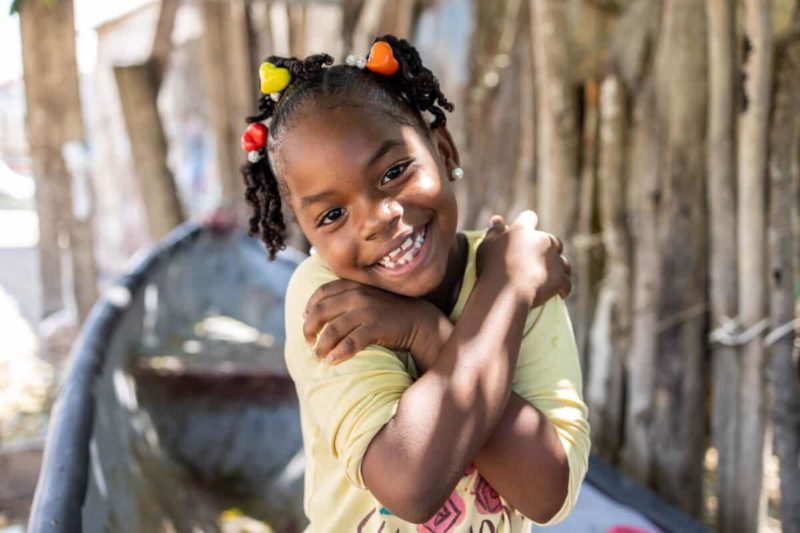
Sponsor a child I think I just had my first parental moment.

You know the scene in any coming-of-age movie when a teenage girl is about to go to her first dance and she appears at the top of the stairs and her parent (usually a widowed father) stands there with tears in his eyes and a huge lump in his throat, totally entranced by his daughter’s newly uncovered beauty?

That’s how I feel – entranced by a new level of beauty.

While I was working in our child database I stumbled across a new picture of my sponsored girl – one I haven’t received in the mail yet – and I’m not exaggerating when I tell you my heart skipped a beat. Apparently sometime between three months ago and now, she grew up.

She’s so beautiful it brings tears to my eyes.

You see, I started sponsoring Karina when she was 6 years old. Read the rest of this entry »

Nov 18

Written by: Web Team

No Gravatar

AIDS deaths Here’s question seven in our lead-up to World AIDS Day on Dec. 1.

Remember when you answer each day’s HIV/AIDS question correctly, you are eligible to win a free CD – your choice of either Portable Sounds by tobyMac or Beyond Measure by Jeremy Camp. We’ll randomly choose a winner each day from the correct answers.


The answer to yesterday’s question is false.

ART is not a cure for HIV; rather ART prevents the virus from replicating in the body. By stopping HIV from making copies of itself, less virus occurs in the body, which in turn allows the immune system (T cells) to rebuild itself. A stronger immune system can then defend the body and keep a person fairly healthy.

Source: www.cdc.gov/hiv/topics/treatment/index.htm, November 2008

Nov 17

Written by: Ian Durias

No Gravatar

Dr. Matt Rindge, assistant professor of Religious Studies at Gonzaga University and a Compassion Child Advocate, spoke at our National Advocates Conference in October. In his message, he shared two observations about Jesus’ ministry.

  1. The primary effect of Jesus’ healings was to include social outcasts into community.

    Jesus’ healings restored outcasts to community by removing the obstacle that made them outcasts. By eating with outcasts, Jesus welcomed and accepted them just as they were.

    With the temple incident He critiqued a system/structure that excluded outcasts on the basis of their race.

  2. Jesus touched those whom He healed. He was willing to get dirty and even become unclean by touching them.
    • Lepers (Mark 1:40–45)
    • Bleeding / Hemorrhaging Woman (Mark 5:24b-34)
    • Jairus’ Daughter (Mark 5:22-24, 35-43)
    • Physically Disabled (Mark 2:1-12; 3:1-6; 7:32-37; 10:46-52)

As Compassion Child Advocates we are critical in the work of restoring social outcasts — children in poverty — to community. While I can’t say that I’ve ever healed anybody in Jesus’ name (I’ve tried), I do believe that Jesus is bringing healing through our advocacy — a healing that gives children a voice and that begins to take the poverty out of them.

What I’m especially convicted by is Rindge’s second observation about Jesus’ physical touch. Jesus got dirty, even unclean, according to Jewish law, by doing so.

I confess that a lot of my advocacy hasn’t gone that far.

Wess Stafford, our President and CEO, regularly shares that his mission is to “comfort the afflicted and afflict the comfortable.”

I love this statement. What’s also true is that the comfortable may afflict you right back. They did Jesus when they denounced Him for reaching out to social outcasts. And if my advocacy doesn’t result in me being marginalized myself, it’s lacking.

As you “speak up for those who cannot speak for themselves,” are you encountering resistance?

If you are, it’s probably because you look a lot like Jesus.

Nov 17

Written by: Web Team

No Gravatar

HIV Antiretroviral Therapy Here’s question six in our lead-up to World AIDS Day on Dec. 1.

Remember when you answer each day’s HIV/AIDS question correctly, you are eligible to win a free CD – your choice of either Portable Sounds by tobyMac or Beyond Measure by Jeremy Camp. We’ll randomly choose a winner each day from the correct answers.


The answer to yesterday’s question is false.

HIV can be passed from a mother to her child in three ways: during pregnancy, during childbirth, or through the breast milk. Even though children may not be infected when they are born, they can still be infected later through their mother’s breast milk.

Simple drug interventions, however, can prevent mother-to-child transmission, which can greatly reduce the overall rate of HIV transmission.

Source: The Skeptic’s Guide to the Global AIDS Crisis by Dale Hanson Bourke (Colorado Springs, Colo.: Authentic Books, 2006), p. 15

Nov 16

Written by: Becky Tschamler

No Gravatar

Crisis reportingWhew!

This has been a busy year. Our world is in turmoil and much of that turmoil is affecting Compassion’s work.

Here’s a snapshot of the things I’ve reported over the past 11 months:

military rebellion, slum fire, dengue fever outbreak, H1N1 virus outbreak, flooding, strike, civil conflict, volcanic eruption, earthquake, heavy rains, political unrest, hotel bombings, protests and violence, typhoons, meningitis outbreak, polio outbreak, cholera outbreak, famine, landslide, tribal war, ferry sinking, riots.

As an organization entirely dependent on your trust, we have made a commitment to be honest and transparent in everything we do. This means, among other things, that we do our best to let you know as soon as possible when your child is affected by a crisis or disaster.

In a perfect world, here’s how the process would work:

  • Within 24 hours of a crisis, our Field Communications Specialist (FCS) submits a crisis report via e-mail. This e-mail comes to an inbox that I check regularly.
  • As soon as I receive this e-mail, I determine whether funds will need to be raised to provide relief, and summarize the report and e-mail it to our partner countries (the countries where the sponsors live).
  • Meanwhile, the FCS is in contact with the Partnership Facilitators (PF), field-based staff members who are contacting our affected church partners.
  • The FCS then submits a follow-up report via e-mail, with further details from the PFs about which centers are affected, how they are affected, and any other relevant details, photos or video.
  • As soon as the church partners are able to provide specific information on registered children, the FCS e-mails that information to me. I do a quality check and then forward that information to the partner countries.
  • Each partner country then contacts all the sponsors with affected children to let them know the status of their child.

Seems pretty cut and dried, right? And often, the process works exactly as I just described it.

However, as we all know, we do not live in a perfect world. Sometimes a disaster will wreak havoc on the field’s end, thus affecting our communications process.

Let’s take the recent typhoons in the Philippines as an example. Read the rest of this entry »

« Previous Entries